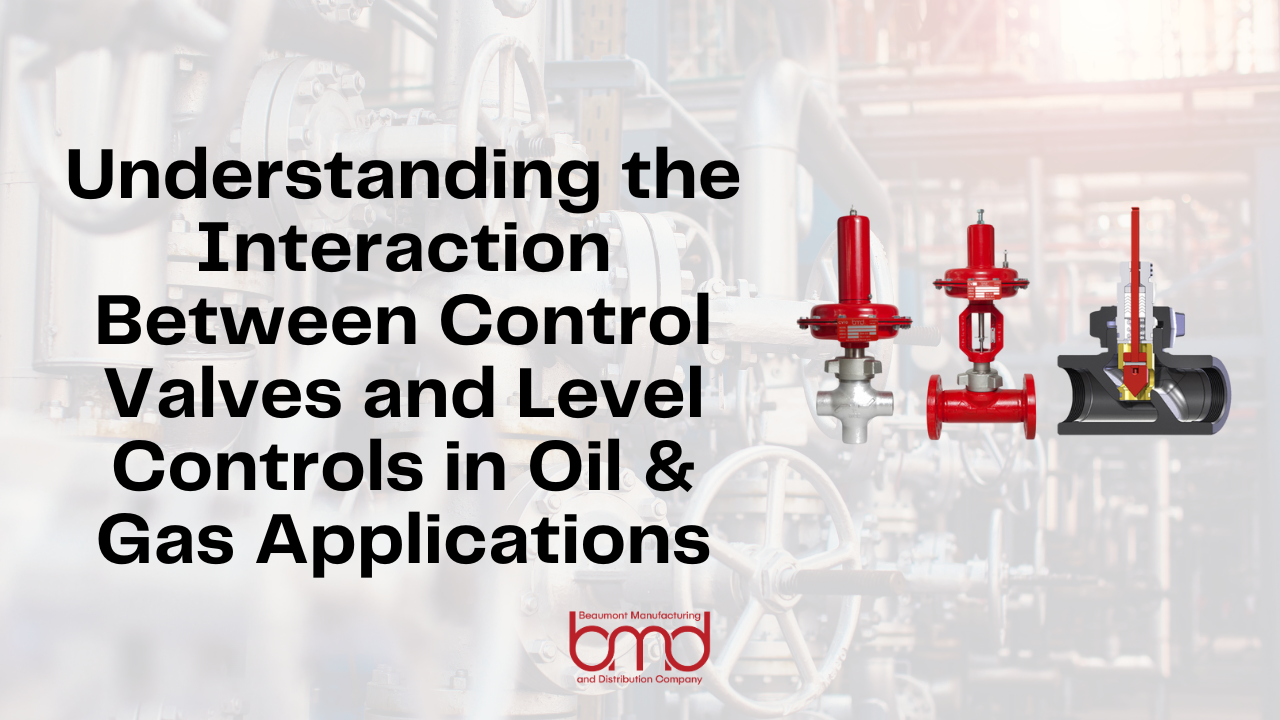
Understanding the Interaction Between Control Valves and Level Controls In Oil & Gas Applications

Website Editor • May 16, 2025

Introduction

In oil and gas production facilities, flow and level control are critical for maintaining operational integrity, optimizing production rates, and ensuring equipment protection. Flow control involves regulating the movement of oil, gas, water, and other fluids through pipelines and processing equipment. This is typically achieved using specialized control valves that adjust the rate and pressure of flow based on real-time operational requirements. Level controls, on the other hand, ensure that liquid levels in storage tanks or process vessels stay within specified limits to avoid overflow, underflow,, which can lead to hazardous situations or damage equipment.


Flow and level control are interdependent. For example, an increased liquid discharge rate without corresponding flow control adjustments can destabilize separator pressure regimes, affecting downstream gas handling systems. Similarly, changes in flow rates can impact fluid levels in storage tanks. Therefore, precise and dynamic integration of these controls is mandatory to avoid process upsets due to unstable flow rates, fluctuating pressure levels, or unsafe liquid levels. Improper valve actuation or sluggish level control can lead to severe consequences, including over-pressurization, hydrocarbon release, inefficient separation, and mechanical failures. 

In the inherently hazardous oil and gas sector, accurate level control plays a crucial role in safeguarding operations while optimizing efficiency.


Beaumont Manufacturing and Distribution Company (BMD), specializes in high quality level and flow control solutions. BMD’s high-quality, precision-engineered flow and level control solutions reflect our innovative engineering and deep understanding of hydrocarbon production environments. This article highlights how Beaumont Manufacturing and Distribution’s (BMD) advanced control valves and level controls work together seamlessly to provide precise and dependable solutions for oil and gas production operations.


BMD’s Role in Flow and Level Management

Beaumont Manufacturing and Distribution Company (BMD), based in Texas, is renowned for its rugged control valves, extensively utilized for managing flow, pressure, and level control in upstream and midstream service. BMD combines innovative engineering with a steadfast commitment to quality and environmental protection. Every model features fugitive emission packing to eliminate leaks, reflecting our dedication to smart and sustainable solutions. With advanced manufacturing facilities in Texas, we ensure superior product quality. Rooted in integrity and excellence, we foster strong partnerships and deliver dependable results, driving our clients’ missions forward with ingenuity.


BMD takes pride in being a service-focused, innovative company that harnesses field experience and practical, lean engineering. Our mission has always been to support technicians in optimizing production processes. Oil and gas operators quickly recognize the value of BMD’s dependable level and flow control products, which ensure precision control and optimize operations. With distinctive features such as force-balanced design, quick-open trim, bubble-tight shut-off, and fugitive emissions packing, our control valves have consistently demonstrated their exceptional performance in upstream and midstream production environments.


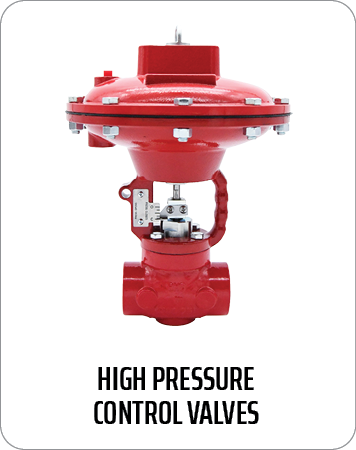
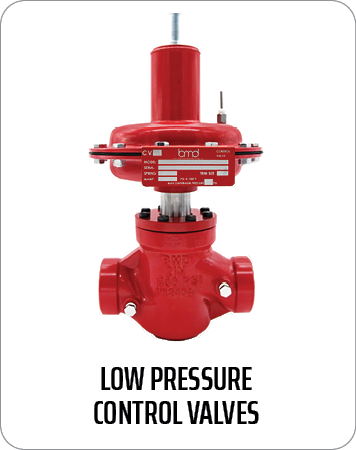
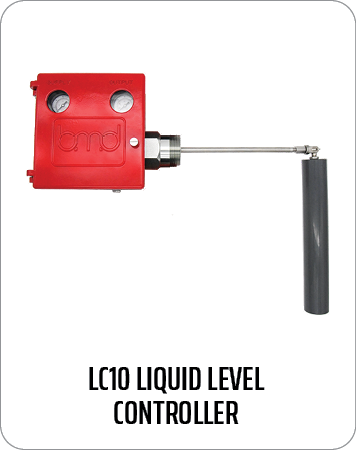
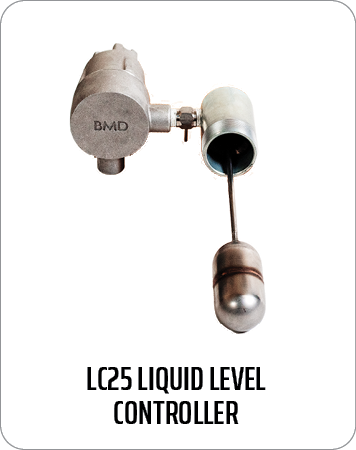
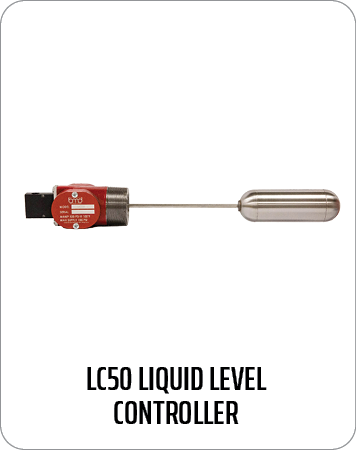
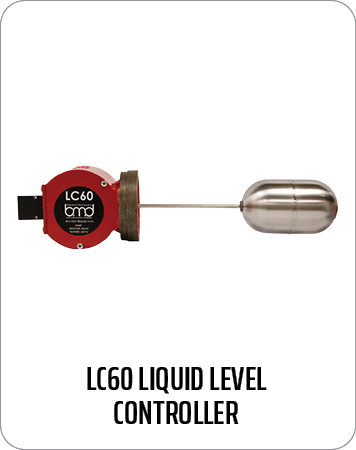
BMD offers a versatile range of pneumatic control valves designed for both high- and low-pressure applications, featuring cage-guided, non-freeze, and stem-guided options. These valves seamlessly integrate with our extensive selection of pneumatic and mechanical level controllers, which utilize float or displacer-type level sensors. Together, these integrated systems are deployed in critical applications, including separators, scrubbers, and various production vessels.


What Are Control Valves and How Does BMD Design Them?

Control valves are the final control elements in automatic control loops that regulate fluid flow to ensure stable operating conditions in oil and gas equipment such as separators, scrubbers, tanks and other process vessels. They function by varying the flow area through the valve trim—consisting of the plug, seat, and stem—tailored to flow characteristics like linear or quick opening. Actuators adjust the plug position based on controller signals, changing the opening size and enabling precise, predictable control of fluid movement for optimal performance. BMD provides an extensive selection of control valves tailored for oil and gas applications, suitable for diverse pressure, temperature, and flow control needs. 


Key features are as follows:

Pressure Rating:  BMD control valves are categorized into high-pressure and low-pressure variants. High-pressure control valves are rated up to ANSI 1500# for valve sizes up to 4 inches, whereas high-pressure valves with a size of 6 inches are available with an ANSI rating of up to 600#. BMD low-pressure valves are offered in pressure ratings of 250 psi, 300 psi, and 500 psi for sizes up to 4 inches.


Material Selection:  BMD control valves are manufactured from carefully selected materials to address critical factors such as sour service, corrosion resistance, erosion resistance, and operational conditions, including pressure and temperature. 

Valve bodies are primarily made from ASTM A216 WCC for standard applications and ASTM A352 LCC for low-temperature environments. Valve trims are offered in various stainless-steel grades, such as 440C, 316, and 304, with specialized carbide trims providing enhanced erosion resistance. Packing plugs are generally manufactured from nickel- or zinc-plated ASTM A105 steel, ensuring durability and reliable performance.


Leakage Class: All our high-pressure valves are rated to meet at minimum ANSI Class IV leakage standard, which represents the industry benchmark for metal-seated oil and gas control valves. BMD’s high- pressure CV30 model is available with a soft seat option rated for ANSI Class VI, while all the low-pressure valves are available with soft seats, ensuring leak-lightness at shutoff.


Valve Flow Characteristics: BMD control valves are offered with Equal Percent, Linear, and Quick Open characteristics, catering to control requirements ranging from precise modulation to rapid discharge actions. Additionally, we provide valve models with modified percentage characteristics, designed for applications that require accurate throttling at low capacities while ensuring consistent performance at higher capacities.


Actuation:  All BMD control valves are designed for pneumatic actuation.

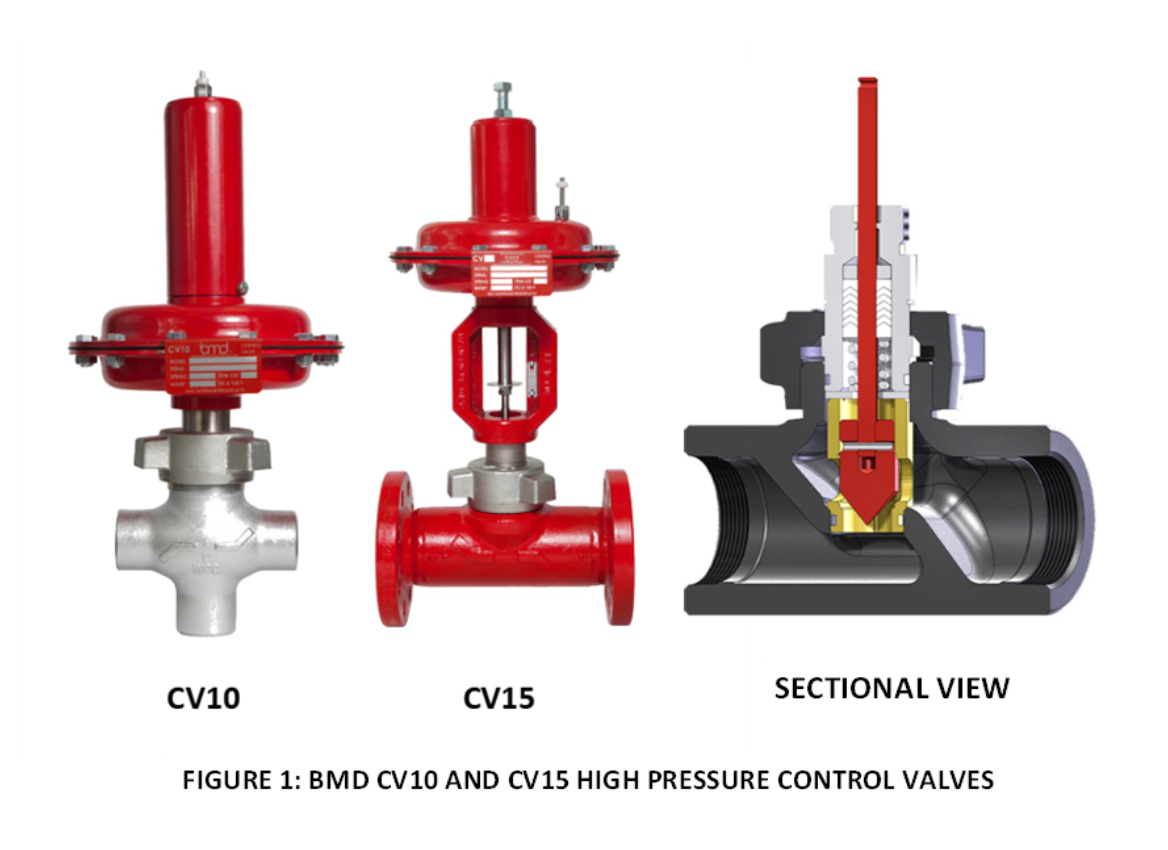
Standout examples demonstrating BMD’s expertise in combining innovative design with robust construction are the CV10/CV15 control valve models. These compact, cage-guided valves are designed for a wide range of applications, including pressure, level, and flow control. Their unique design makes them ideal for wellhead service as well as conventional level control applications in separators, scrubbers, and other production equipment. 


The CV10/CV15 design features a hammer union that simplifies maintenance by enabling the topworks to be removed without taking the valve out of line. For sour service, a NACE-compliant option is available. For abrasive conditions, such as oil and gas wells with high sand concentrations in the flow, the CV10/CV15 can be equipped with a sand body and a replaceable plug, ensuring enhanced durability and reliability. The CV10 is a close coupled designed and the CV15 is an open yoke
design as shown in Figure 1.


What Are Level Controls and What Does BMD Offer?

BMD level controllers measure liquid levels using sensors such as floats or displacers. The float-type sensor relies on a buoyant device attached to a lever or linkage that moves as the liquid level changes. This movement is transmitted to the control mechanism, which sends a pneumatic or electrical signal to the level control valve. These signals cause the valve to open or close, regulating the outflow of liquid to maintain the desired level.


Similarly, the displacer-type level controller operates on the same principle. It uses a displacer suspended in the liquid. As the liquid level changes, the buoyant force acting on the displacer varies, causing movement in the sensing mechanism. This movement generates a pneumatic or electric signal to adjust the control valve. 


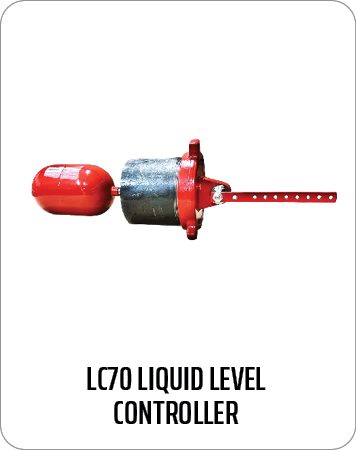
BMD also offers a purely mechanical level controller. The LC70 level controller features a large float, linkage rod, and levers to mechanically operate a dump valve through rotational connections. Paired with BMD’s CV45 mechanical valve, the LC70 offers a cost-effective, emissions-free level control and dump system, since the control valve does not need a separate actuator. Figure 2 shows a typical level control arrangement using the BMD LC70/CV45 combination.


How BMD Control Valves and Level Controls Work Together

BMD control valves and level controls are engineered to work cohesively, ensuring optimal performance. Here’s how they typically work together in a separator level control application, step-by-step:


Level Rises in the Separator:  Due to inflow of produced well-fluids the liquid level inside the vessel gradually rises.


Level Controller Detects the Change: The BMD float or displacer sensor responds to the level increase by moving up.


Pneumatic Signal Sent to Control Valve:  The sensor’s movement triggers a pneumatic output from the level controller, which can be either a modulated or an on/off signal, depending on whether the controller is equipped with a modulating pilot or a snap-action pilot. A modulated signal varies proportionally with deviations from the setpoint, increasing pressure as the level rises and decreasing as it falls. A snap action pilot, however, fully transmits or diverts the signal, creating a binary on/off response. All BMD controllers use snap action pilots, while the LC10 model also offers a throttling pilot option


Control Valve Modulates Liquid Flow:The pneumatic signal is sent to a control valve located on the separator’s liquid outlet line. The control valve responds by adjusting its opening, to increase the outflow so that level falls back towards the setpoint. When the liquid level decreases, the level controller detects the drop and cuts off the pneumatic signal to the valve, causing it to close.


Figure 3 shows a typical installation of a BMD LC10 level controller connected to a BMD CV10 pneumatic control valve, controlling the level in a vertical separator.


BMD’s integrated level control systems are a complete solution produced at our plant in Texas, under strict quality control. Our proven range of control valves, each equipped with fugitive emissions packing coupled to our extensive family of level controls, form a rugged, reliable package that has proved its mettle in optimizing production rates at our client installation. With long-lasting durability and simple design BMD valves lower maintenance costs while protecting the environment.


Application Scenarios for BMD Valves + Level Controllers

Level controllers and control valves play an essential role in the efficient operation of oil and gas equipment such as horizontal and vertical separators, heater treaters, production skids, and tank batteries.

Horizontal and vertical separators: In separators, level controllers maintain the correct fluid levels between oil, water, and gas phases, ensuring proper separation. They modulate the opening of control valves to precisely discharge separated fluids at optimal rates, preventing upset conditions leading to low- or high-level trips.

In heater treaters, which utilize heat to break oil-water emulsions, interface level controllers manage the boundary between oil and water. These controllers send appropriate signals to the control valve, which regulates the flow rate of the oil phase. If the interface level begins to drop, the control valves reduce the oil overflow rate. Conversely, when the interface level rises, the control valves increase the oil overflow by opening further. Interface level control ensures that oil is not carried into the underflow with water and that water is not carried over with the oil overflow.

On production skids, which often house multiple processing components, level controllers and valves coordinate the flow and separation processes, maintaining balance across vessels to ensure smooth operation. Proper control avoids process upsets that can reduce production or damage equipment.

At tank battery outflows, level controllers monitor fluid levels in storage tanks, activating control valves to manage outflow rates safely. This prevents tank overflows, product loss, and environmental hazards.

Overall, the integration of level controllers and control valves across these systems is critical to maximizing production efficiency, equipment longevity, and safety in oil and gas operations.


Why Choose BMD for Control and Level Applications

There are numerous compelling reasons to choose BMD control valves and level controllers. Manufactured at BMD’s Texas facility under stringent quality standards, these products are celebrated for their exceptional reliability in demanding oil and gas environments.  BMD’s expert engineers and technicians are dedicated to delivering prompt technical support and tailored solutions to meet even the most complex customer requirements.


Conclusion

BMD’s versatile control valves and level controllers, seamlessly integrate to excel in critical operations like separators, scrubbers, and production vessels, ensuring efficiency across high- and low-pressure applications. Rugged and reliable, BMD’s integrated level control solutions have empowered clients to boost production rates, minimize environmental risks, and cut maintenance costs significantly.

Looking for the perfect solution for your complex system? The BMD team is here to assist you in finding the right product for your application.


By satha March 27, 2026
BMD Launches Repair and Replacement Series
By Website Editor July 11, 2025
How to Maintain & Troubleshoot Relief Valves for Long-Term Performance Relief valves serve as essential safety equipment in oil and gas operations, regulating system pressures to safe levels while preventing destructive system failures. They operate as safety devices for pipelines, separators, and storage tanks throughout upstream and midstream oil and gas systems. BMD produces spring-loaded pressure relief valves that fulfill the highest requirements for durability, corrosion resistance, and reliability. However, even the most durable valves require scheduled maintenance and prompt troubleshooting to achieve optimal performance. Failing to maintain equipment properly leads to operational downtime, increased safety risks, and costly repair expenses. The following article provides instruction for relief valve maintenance and troubleshooting to ensure BMD valves operate safely and efficiently throughout their extended lifespan. Understanding BMD Relief Valves BMD relief valves are reliable and long-lasting. They can handle high-pressure systems, protecting against overpressure situations that could otherwise compromise the integrity of pipelines, storage tanks, and other critical equipment. BMD offers spring-loaded pressure relief valves that serve multiple applications across the oil and gas sector. The valves are in pipelines, separators, and storage tanks, where they protect equipment from overpressure. BMD valves surpass American design standards to deliver peak performance in demanding operational conditions. Common features include: Corrosion Resistance: BMD relief valves are designed to withstand corrosive environments commonly found in oil and gas operations, ensuring durability and a longer service life. Spring-Loaded Design: These valves provide reliable pressure relief by automatically opening when the system pressure exceeds the preset limit. American-Made Durability: Designed and manufactured in the U.S., BMD relief valves offer a high level of precision, performance, and safety. When properly installed and maintained, these valves can significantly improve the safety and efficiency of your oil and gas systems. Understanding their design and function is key to performing effective maintenance and troubleshooting. Why Relief Valve Maintenance is Critical Relief valves protect oil and gas operations by preventing overpressure, which can stop leaks, prevent equipment damage, and prevent catastrophic failures. The relief valves require regular maintenance to maintain their optimal operational state. Poorly maintained relief valves can cause various issues, such as: Worn seals or improper valve seating can result in leaks that compromise system pressure and cause safety hazards. If a valve opens too frequently or at the wrong pressure, it can cause unnecessary pressure drops that disrupt operations. Accumulation of debris or corrosion inside the valve can block the flow path, reducing the valve’s effectiveness. Regular inspection and maintenance can help detect and resolve these issues before they escalate. BMD recommends inspecting relief valves regularly based on operational conditions, including pressure cycles and environmental factors. Follow the manufacturer’s guidelines for maintenance intervals to ensure that valves perform reliably over time. Relief Valve Standards & Maintenance Recommendations BMD manufactures safety relief valves under Section XIII of the ASME code. To maintain compliance and performance, all relief valves need to be sent to a qualified VR shop for reset and recertification—this process cannot be performed by the end user. In addition, BMD strongly recommends that customers have a maintenance program in place that includes annual re-certification by a National Board certified shop holding a VR stamp to ensure safety, reliability, and regulatory compliance. Relief Valve Troubleshooting: Common Issues and Fixes Regular maintenance does not prevent relief valves from developing problems. The following section outlines typical problems together with specific troubleshooting procedures for BMD valves. The valve fails to open at its specified pressure setting. Possible Causes: Incorrect valve settings or blockage. Troubleshooting: The spring condition should be checked for wear while verifying that the valve operates at its designated pressure setting. The valve components need cleaning to remove any blockages that might exist. The valve operates at higher frequencies than expected or before reaching the set pressure. Possible Causes: Fluctuating process pressure, debris under the seat, or incorrect settings. Troubleshooting: The valve seat should be inspected for debris while verifying that the pressure settings match the specifications. The necessary adjustments or replacements should be made to the components. The valve develops leaks after its activation. Possible Causes: Seat wear, seal damage, or improper reassembly. Troubleshooting: The internal components need replacement or reseating according to the situation. All parts need correct alignment during reassembly to stop leaks from occurring. Audible chattering or vibrations. Possible Causes: Back pressure, poor mounting, or improper valve sizing. Troubleshooting: Check both the mounting and installation procedures and backpressure conditions. BMD provides installation guidelines which help users select appropriate valves and determine correct flow sizes. Long-Term Performance Tips for BMD Relief Valves The following best practices will help you achieve long-term performance: Create a maintenance schedule that considers operating conditions and manufacturer recommendations. Maintain detailed documentation of all maintenance work, inspection results, and replacement records. Technicians should receive BMD-specific maintenance training to perform proper care of the equipment. The use of OEM parts for all repair and rebuild operations will preserve both performance and reliability. Send the valve to BMD for factory service or certified testing when issues persist or when the valve exhibits significant signs of wear. Conclusion The oil and gas industry requires regular maintenance and accurate troubleshooting of relief valves to ensure safe and reliable operations. BMD relief valves are built to withstand demanding conditions, but their long-term performance depends on regular maintenance. The maintenance and troubleshooting guidelines in this guide will help you maintain relief valve reliability, which leads to better system safety and compliance, along with operational efficiency. For further assistance with OEM parts or technical support, contact BMD.

More Posts